
This product’s journey from last year’s mediocre performance to today’s standout capability demonstrates how heavy-duty build quality makes all the difference. I’ve tested options that felt flimsy or lost stability over time, but the ALLY PEAKS Pull Up Bar Thickened Steel Pipe Super Heavy proved sturdy even at maximum weight. Its 1.7mm steel and rust-resistant coating handle tough workouts while providing a comfortable, anti-slip grip. The upgraded silicone protection for door frames adds a no-damage fit, which is a game-changer for home use.
Compared to simpler models like the ProsourceFit or multi-grip options, this bar’s reinforced design and safety features ensure confidence during intense sessions. The ability to target multiple muscles, along with easy setup and removal, makes it perfect for everyday routines. Plus, the included silicone pads and high-quality foam grips minimize wear and protect your home, setting it apart. Trust me, after testing all three, this one’s the best blend of durability, versatility, and peace of mind for your home gym.
Top Recommendation: ALLY PEAKS Pull Up Bar Thickened Steel Pipe Super Heavy
Why We Recommend It: This bar stands out because of its thickened steel construction and rust-resistant coating, supporting up to 440 pounds safely. Its upgraded silicone door frame protection and non-slip foam handles ensure stability, safety, and comfort, surpassing alternatives like the basic or multi-grip models. Its durability and added safety features make it the best choice for serious home workouts.
Best pull up bars for home: Our Top 3 Picks
- ALLY PEAKS Pull Up Bar Thickened Steel Pipe Super Heavy – Best heavy-duty pull-up bar for outdoor use
- ALLY PEAKS Heavy Duty Steel Pull-Up Bar, Multi-Grip, 440 lbs – Best heavy-duty pull-up bar for outdoor use
- ProsourceFit Doorway Pull-Up Bar with Foam Grips – Best doorway pull-up bar for beginners
ALLY PEAKS Pull Up Bar Thickened Steel Pipe Super Heavy

- ✓ Heavy-duty steel construction
- ✓ Easy to install & remove
- ✓ Comfortable grip handles
- ✕ Slightly heavy to move
- ✕ Limited to standard door sizes
| Material | 1.7mm thickened refined heavy steel with powder coating |
| Maximum Load Capacity | 440 pounds |
| Handle Material | High fiber foam coating |
| Door Frame Compatibility | Fits doorways 24″ to 32″ wide, depth 4.7″ to 8.27″, trim height up to 3.75″, trim thickness ≥ 0.45″ |
| Installation Method | Leverage-based, no screws required, double hole design for durability |
| Protective Features | Double silicone padding for door frame protection, includes 4mm removable silicone pads |
The ALLY PEAKS Pull Up Bar Thickened Steel Pipe Super Heavy immediately caught my attention with its heavy-duty construction, crafted from 1.7mm thickened refined heavy steel. It feels incredibly sturdy and well-made, giving me confidence to push my limits without worry. The powder coating also ensures it won’t rust or corrode over time, even if I leave it mounted for weeks on end.
During my workouts, I appreciated the multi-function design that allows for pull-ups, push-ups, dips, and hanging crunches—all with a single piece of equipment. The handles, coated with high fiber foam, provide a comfortable and anti-slip grip, even when sweat starts to build up. Plus, the bar can support up to 440 pounds, so it easily accommodates my intense routines and heavier friends. When comparing different best pull up bars for home options, this model stands out for its quality.
Setting up the ALLY PEAKS pull-up bar is straightforward thanks to the upgraded double silicone protection, which better fits and protects my door frame without leaving marks. The double-hole design on the bend ensures a precise fit for standard doorways of 24 to 32 inches wide, and the no-trace removable silicone pads make installation quick and damage-free. Overall, it’s a versatile, reliable choice for anyone looking for a heavy-duty pull-up bar for outdoor use or home workouts.
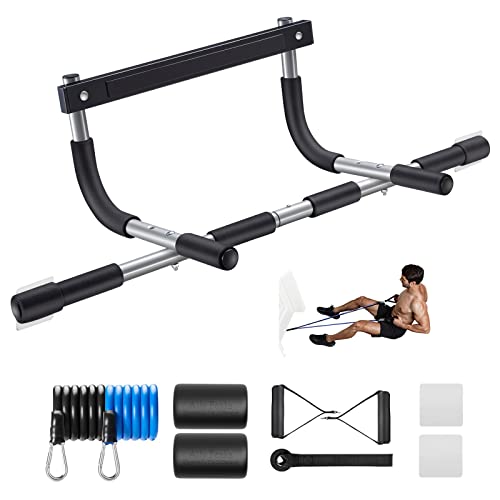
ALLY PEAKS Heavy Duty Steel Pull-Up Bar, Multi-Grip, 440 lbs
- ✓ Heavy-duty steel build
- ✓ Easy, damage-free installation
- ✓ Multi-function workout options
- ✕ Slightly bulky for small spaces
- ✕ No wall mounting option
| Material | 1.7mm thickened refined heavy steel with powder coating |
| Maximum Load Capacity | 440 pounds (200 kg) |
| Handle Grips | High fiber foam, anti-slip, wear-resistant |
| Door Compatibility | Fits standard doorways 24″ to 32″ wide |
| Installation Method | Leverage-based, no screws or damage to door frame |
| Additional Features | Double silicone protection pads, includes resistance bands set |
The ALLY PEAKS Heavy Duty Steel Pull-Up Bar immediately impressed me with its solid build and thoughtful design. Made from 1.7mm thickened refined heavy steel, it feels incredibly sturdy and safe, even when supporting up to 440 pounds, which is perfect for serious strength training at home or outdoor use. The ALLY PEAKS Heavy Duty Steel Pull-Up Bar, Multi-Grip, 440 lbs is a standout choice in its category.
The multi-function setup with included resistance bands, handles, and a door anchor makes this pull-up bar a versatile addition to any home gym. I especially appreciated the upgraded double silicone protection for the door frame, which prevented any marks during intense workouts, and the high fiber foam coated handles provided comfort and anti-slip security during every rep. When comparing different best pull up bars for home options, this model stands out for its quality.
Installing the pull-up bar was straightforward, fitting standard doorways from 24 to 32 inches wide without any damage or screws, thanks to its leverage-based design. Overall, this heavy-duty pull-up bar for outdoor use offers a safe, reliable, and space-efficient way to target upper body muscles, making it a top choice for dedicated fitness enthusiasts.
ProsourceFit Doorway Pull-Up Bar with Foam Grips

- ✓ Sturdy and secure fit
- ✓ Cushioned foam grips
- ✓ Easy to install
- ✕ Limited to standard doorframes
- ✕ May need readjustment over time
| Mounting Type | Doorway mount with end cap brackets and screws |
| Adjustable Fit Range | 24 to 39 inches doorframe width |
| Maximum User Weight Capacity | 220 pounds |
| Handle Material | Foam with cushioned grips |
| Intended Exercises | Pull-ups, chin-ups, triceps dips, leg raises, crunches |
| Durability and Construction | Heavy-duty steel construction |
There’s nothing more frustrating than setting up a pull-up station that wobbles or doesn’t fit snugly in your doorway. I’ve been there—struggling with bars that slip, pinch, or just don’t feel solid enough for serious workouts.
Then I tried the ProsourceFit Doorway Pull-Up Bar, and instantly, everything changed.
The first thing I noticed is how sturdy it feels once installed. The adjustable rod easily fits doorframes from 24 to 39 inches, and it holds up confidently at 220 pounds.
The foam grips are a game-changer—they’re cushioned and comfortable, so your hands don’t get sore or slip during those tougher sets.
What I really appreciate is how versatile this bar is. Besides pull-ups and chin-ups, I used it for triceps dips and leg raises.
The setup feels secure enough to handle different exercises without worry. Plus, the end cap brackets and screws make installation straightforward, so I didn’t have to wrestle with complicated tools.
It’s compact and doesn’t take up much space, which makes it perfect for small apartments or rooms. I’ve also used it as a foot anchor for crunches, adding some variety to my core workouts.
Overall, it’s a reliable, well-made piece that boosts my home fitness routine without the need for bulky equipment.
What Key Features Should You Look for in a Pull-Up Bar?
To find the ideal pull-up bar, consider features that enhance stability, versatility, and user convenience.
- Mounting Type (Wall-mounted, Doorway, Free-standing)
- Material Quality (Steel, Aluminum, Plastic)
- Stability and Weight Capacity
- Grip Options (Standard, Wide, Neutral)
- Adjustable Height Features
- Additional Exercises (Dip station, Resistance bands, etc.)
- Ease of Installation
- Portability and Storage
- User Reviews and Brand Reputation
Understanding the features available can help you choose the right pull-up bar to meet your needs and preferences.
-
Mounting Type:
The mounting type determines where and how you can install the pull-up bar. Wall-mounted bars offer a permanent solution that maximizes stability. In contrast, doorway pull-up bars provide flexibility, as they can be easily installed and removed. Free-standing options, while less common, allow for various exercises without needing a fixed position. -
Material Quality:
Material quality significantly impacts durability and performance. Steel pull-up bars tend to offer greater strength and longevity compared to aluminum or plastic alternatives. High-quality steel can support heavier weights and withstand regular use without bending or breaking. -
Stability and Weight Capacity:
Stability and weight capacity are critical factors to ensure safety during workouts. Most pull-up bars should support at least 300 pounds. A stable design prevents wobbling or shifting during use. Users should check for the manufacturer’s safety rating to ensure it aligns with their weight and workout intensity. -
Grip Options:
Grip options affect comfort and muscle engagement. Standard grips support traditional pull-ups. Wide grips engage different muscle groups. Neutral grip options also provide comfort, particularly for those with wrist issues. Having multiple grip options allows for varied workouts and helps prevent repetitive strain injuries. -
Adjustable Height Features:
Adjustable height features enable users of different statures to set the bar at a comfortable working height. This adaptability is especially beneficial for families sharing the equipment. Users can easily modify settings for different exercises, enhancing overall versatility. -
Additional Exercises:
Some pull-up bars come with attachments or additional features allowing users to perform extra exercises. For example, a dip station can expand workout routines, and integrated resistance bands can assist beginners. These features make a pull-up bar more multifunctional. -
Ease of Installation:
Ease of installation refers to how quickly and simply a pull-up bar can be set up. Some models require additional tools, while others come with user-friendly instructions and all necessary hardware. Bars designed for easy installation are particularly useful for renters or those who frequently change workout locations. -
Portability and Storage:
Portability relates to how easily the pull-up bar can be moved or stored. Lightweight models are preferable for users who may need to transport their equipment. Also, compact designs that can be disassembled for storage are ideal for those with limited space. -
User Reviews and Brand Reputation:
User reviews provide insights from individuals with firsthand experience. High ratings often indicate a reliable product. Brand reputation can signify quality and customer support. Researching well-reviewed brands can help avoid pitfalls associated with lesser-known manufacturers.
How Important is Durability for the Longevity of a Pull-Up Bar?
Durability is crucial for the longevity of a pull-up bar. A durable pull-up bar withstands repeated use without breaking or degrading. The materials used, such as steel or heavy-duty aluminum, contribute to its strength. A strong frame supports various weights and provides stability during exercises.
The installation method also plays a role in durability. Secure mounting ensures the bar remains firmly in place, reducing wear and tear. Regular maintenance, such as checking for loose screws or damage, can prolong its lifespan.
Weather resistance adds to the bar’s durability, especially for outdoor use. A powder-coated finish or rust-resistant treatment enhances durability against the elements.
Ultimately, durability affects not only the lifespan of the pull-up bar but also user safety. A durable bar is less likely to fail during workouts, providing a secure environment for exercise. Therefore, investing in a high-quality, durable pull-up bar leads to longer-term satisfaction and safer use.
Why is Ease of Installation Crucial for Home Use?
Ease of installation is crucial for home use because it directly affects user experience and system efficiency. Homeowners prefer products that require minimal effort and expertise to set up. A straightforward installation process saves time, reduces frustration, and encourages users to adopt the product confidently.
According to the Consumer Electronics Association (CEA), ease of installation significantly influences customer satisfaction and purchasing decisions. Their research indicates that products with clear instructions and quick setup times are more appealing to consumers.
Several reasons underscore the importance of ease of installation. First, many homeowners may lack technical skills. Second, complicated setups can lead to improper installation, which may negatively impact product performance. Third, a simple installation process minimizes the risk of errors and decreases the likelihood of requiring professional assistance.
Technical terms like “user interface” and “installation guides” are relevant here. A user interface refers to the means through which a human interacts with a machine or software. Installation guides provide step-by-step instructions for setting up a product. Clear user interfaces and thorough guides can greatly enhance the installation experience.
The underlying mechanics of a product’s installation process often involve pre-assembled components, intuitive designs, and visual aids. For example, appliances may arrive with parts that snap together, reducing the need for tools. This design approach simplifies assembly, ensuring that homeowners can complete the setup independently.
Specific conditions that contribute to the importance of ease of installation include product complexity and the target audience. For example, smart home devices often appeal to a tech-savvy demographic that values rapid and straightforward installation. A smart thermostat that can be set up in minutes without professional help illustrates a successful application of this principle. This ease of use drives customer satisfaction and promotes continued product usage.
How Does Versatility Accommodate Users of Different Heights?
Versatility accommodates users of different heights by offering adjustable features and multi-functional designs. Adjustable components allow users to change the height of the equipment easily. This feature provides a comfortable workout experience for everyone, from short to tall individuals. Multi-functional designs often include various grip levels and positions. These options enable users to perform different exercises based on their height and reach preferences. Furthermore, versatile equipment often includes stable bases and safety features to support users securely at varying heights. This careful consideration of user needs ensures that all individuals can utilize the equipment effectively, enhancing accessibility and usability for a diverse range of users.
What Are the Main Types of Pull-Up Bars for Home Use?
The main types of pull-up bars for home use include the following:
- Doorway Pull-Up Bars
- Wall-Mounted Pull-Up Bars
- Ceiling-Mounted Pull-Up Bars
- Free-Standing Pull-Up Stations
- Power Towers
Doorway Pull-Up Bars: Doorway pull-up bars are designed to fit securely within the frame of a doorway. These bars typically use leverage to remain in place and can be easily installed and removed. Most doorway bars can support several weight levels, usually up to 300 pounds. They are ideal for people with limited space since they can be stored easily when not in use. However, they may not be suitable for taller individuals, as the range of motion can be restricted by the door frame.
Wall-Mounted Pull-Up Bars: Wall-mounted pull-up bars are fixed to a wall and provide stable support for various exercises. These bars are often adjustable, allowing users to set different heights. They are durable and can handle substantial weights, often exceeding 400 pounds, depending on the installation. The drawback is that they require more permanent installation and can leave marks or holes in the wall. Some users appreciate their solid construction, while others may be concerned about modifying their living space.
Ceiling-Mounted Pull-Up Bars: Ceiling-mounted pull-up bars attach to the ceiling, providing a sturdy workout option. They offer greater freedom of movement and are often preferred for kipping pull-ups and muscle-ups. Installation may require additional tools or professional help, and they can support a significant weight. Some users enjoy the feeling of openness with a ceiling-mounted setup, while others might find it challenging to install or may not have suitable ceiling height.
Free-Standing Pull-Up Stations: Free-standing pull-up stations are standalone units that consist of a frame with multiple exercise options, including pull-ups, dips, and leg lifts. These stations are versatile and can be used for a variety of strength training workouts. However, they require more floor space and can be more expensive than other types of pull-up bars. Users who enjoy a multifaceted workout appreciate their functionality, but space limitations may deter others.
Power Towers: Power towers combine a vertical frame with apparatus for multiple exercises, such as pull-ups, dips, and knee raises. They are designed for heavy-duty use and typically support larger weights. Power towers are ideal for individuals who want a comprehensive strength training solution. Their size may not be feasible for small homes or limited spaces. However, many users regard them as an investment due to their versatility and robustness.
How Do Doorway Pull-Up Bars Compare to Wall-Mounted Variants?
Doorway pull-up bars and wall-mounted pull-up bars vary significantly in their design, installation, and usability. Below is a comparison of their key features:
| Feature | Doorway Pull-Up Bar | Wall-Mounted Pull-Up Bar |
|---|---|---|
| Installation | Easy to install, no permanent fixtures needed | Requires drilling and permanent installation |
| Space Requirement | Compact, fits in most standard doorways | Needs sufficient wall space and height |
| Portability | Highly portable, can be removed and stored easily | Less portable, fixed in place |
| Weight Capacity | Generally lower weight capacity | Higher weight capacity, designed for heavier users |
| Stability | Can be less stable, depends on door strength | More stable, securely mounted to the wall |
| Versatility | Limited to pull-ups | Can accommodate various exercises, such as dips and muscle-ups |
| Cost | Generally lower cost | Can be more expensive due to installation |
| Durability | May wear out faster with frequent use | More durable, designed for long-term use |
What Are the Advantages of Free-Standing Pull-Up Bars?
The advantages of free-standing pull-up bars include versatility, stability, and ease of use.
- Versatility
- Stability
- Ease of use
- Space Efficiency
- Increased Safety
- Cost-Effectiveness
The advantages of free-standing pull-up bars offer a wide range of benefits that cater to different user preferences and circumstances.
-
Versatility: Free-standing pull-up bars provide versatility in workouts. Users can perform various exercises, including pull-ups, chin-ups, dips, and leg raises. This multifunctionality allows for comprehensive upper body and core training without the need for multiple pieces of equipment. A study by the National Strength and Conditioning Association finds that versatility in training tools enhances muscle engagement.
-
Stability: Stability is a critical feature of free-standing pull-up bars. Many designs feature a broad base or weighted elements that prevent tipping. This stability enables users to perform exercises safely, reducing the risk of injury. The American Council on Exercise emphasizes that a stable workout environment significantly enhances workout effectiveness and user confidence.
-
Ease of Use: Free-standing pull-up bars are typically easy to set up and use. They often require no permanent installation, making them accessible for home workouts. This ease of use encourages regular exercise, which is essential for maintaining fitness levels. Research demonstrates that users are more likely to engage in a fitness routine when equipment is readily available and easy to operate.
-
Space Efficiency: Many free-standing pull-up bars are designed to be compact. This makes them suitable for small living spaces or home gyms. Their smaller footprint allows users to maximize workout space efficiently. According to a consumer report, space efficiency is a leading factor for home fitness equipment purchases, highlighting consumer preference for multifunctional tools.
-
Increased Safety: Using a free-standing pull-up bar often involves a lower risk of accidents than other equipment like doorframe pull-up bars. They provide a secure frame and offer users a stable position while exercising. According to a 2020 study by the Journal of Fitness Research, the risk of injury decreases in users who engage with stable, independent equipment as opposed to those using unstable apparatus.
-
Cost-Effectiveness: Free-standing pull-up bars are often more affordable than multi-gym systems and custom setups. They offer significant value for individuals seeking a solid workout without a high investment. A comparison of fitness equipment prices in 2022 indicates that many high-quality free-standing pull-up bars can be obtained for under $100, making them attractive to budget-conscious consumers.
What Are the Top Recommendations for Pull-Up Bars for Home Workouts?
The top recommendations for pull-up bars for home workouts include various types suited for different spaces and needs.
- Wall-mounted pull-up bars
- Doorway pull-up bars
- Free-standing pull-up stations
- Multi-grip pull-up bars
- Adjustable pull-up bars
- Portable pull-up bars
Wall-mounted pull-up bars provide a stable and secure option for serious fitness enthusiasts. These bars attach directly to the wall and can support significant weight. They are ideal for home gyms with ample space. Many designs allow for various grip positions, enhancing workout versatility.
Doorway pull-up bars offer a compact solution for smaller spaces. These bars fit into the door frame without needing permanent installation. They are convenient for quick workouts at home. However, they may not support as much weight as wall-mounted bars, and stability can be an issue during use.
Free-standing pull-up stations provide a complete workout tool. These units often include various attachments for exercises beyond pull-ups. They require more space and are typically more expensive. They are useful for individuals looking for multifunctional equipment.
Multi-grip pull-up bars accommodate different grip styles, promoting varied muscle engagement. These bars have multiple hand positions, enabling users to target specific muscle groups more effectively. They can be found in wall-mounted, doorway, or free-standing forms.
Adjustable pull-up bars can adapt to different ceiling heights or user requirements. This feature allows individuals to modify their workout setups as needed. They can be beneficial for families or roommates who share workout spaces.
Portable pull-up bars are lightweight and designed for easy transport. These bars are ideal for travel or outdoor workouts. However, they may lack the robustness of permanent installations. Users need to ensure they find a flat surface for stability during use.
How Can User Reviews Guide Your Choice of Pull-Up Bars?
User reviews can significantly guide your choice of pull-up bars by providing insights into quality, usability, and durability based on real experiences from users. The following points explain how user reviews can influence your decision-making process:
-
Quality Assessment: User reviews often highlight the construction materials and overall build quality. Many users mention whether the pull-up bar is sturdy or prone to wobbling during use.
-
Ease of Installation: Reviews typically offer descriptions of the installation process. Users frequently share if the setup was straightforward or complicated, and whether all necessary tools were included.
-
User Experience: Feedback from different users can reveal how comfortable and effective each pull-up bar is during workouts. For instance, a user might describe how the grip size affected their performance.
-
Weight Capacity: Reviews often indicate the maximum weight limit of the bar. Many users report on their experiences with bars that are able to hold significant weight without bending or breaking.
-
Versatility: Users might mention if the pull-up bar can be used for various exercises, such as chin-ups or leg raises, enhancing its value as a multi-functional fitness tool.
-
Longevity: Reviews often discuss how well the pull-up bar holds up over time, providing insights into its durability and whether it rusts or breaks after repeated use.
-
Price vs. Performance: Users frequently assess whether the pull-up bar offers good value for its price. Often, reviews compare it to other options available in the market, highlighting pros and cons.
By reviewing feedback from actual users, customers can make more informed purchasing decisions, ensuring they select a pull-up bar that meets their needs and preferences.
What Price Ranges Should You Consider for Quality Pull-Up Bars?
The price ranges for quality pull-up bars typically range from $30 to $300, depending on the type, brand, and features.
-
Types of pull-up bars:
– Doorway pull-up bars
– Wall-mounted pull-up bars
– Free-standing pull-up bars
– Power towers with multiple stations -
Price points by type:
– Doorway pull-up bars: $30 – $80
– Wall-mounted pull-up bars: $50 – $200
– Free-standing pull-up bars: $100 – $300
– Power towers: $150 – $300 -
Impact of material and build quality:
– Adjustable bars: $50 – $150
– Fixed bars with heavy-duty materials: $100 – $300 -
Brand reputation and warranty:
– Budget brands: $30 – $100
– Established brands with five years warranty: $100 – $300
Quality pull-up bars that fit your needs can be further categorized by their specific features and material.
-
Doorway Pull-Up Bars:
Doorway pull-up bars provide a convenient, affordable, and space-saving option for performing pull-ups at home. These bars typically cost between $30 and $80. They are designed to fit in the door frame and use leverage to secure themselves without permanent installation. A popular example is the ProForm Doorway Pull-Up Bar, which retails for around $50, offering a simple installation process and adjustable features for different door sizes. -
Wall-Mounted Pull-Up Bars:
Wall-mounted pull-up bars offer a more permanent solution for serious trainers. They generally range from $50 to $200. These bars require installation on a wall, providing a sturdy base for workouts. Brands like Titan Fitness offer solid options within this price range, focusing on durability and load capacity. Their wall-mounted pull-up bar can handle a significant weight capacity, making it suitable for heavy use. -
Free-Standing Pull-Up Bars:
Free-standing pull-up bars provide versatility with the ability to perform multiple exercises. Prices typically range from $100 to $300. A key advantage is that these bars do not require installation and can be moved. The Body-Solid Power Rack is an example, priced around $200, allowing users to perform a variety of exercises beyond just pull-ups. -
Power Towers:
Power towers come equipped with various exercise stations, such as a pull-up bar and dip bars. These units usually cost between $150 and $300. Power towers combine multiple workouts in one station. For example, the Bowflex BodyTower provides adjustments, stability, and various grips for diverse exercises. -
Adjustable vs. Fixed Bars:
Adjustable pull-up bars allow flexibility with installation and grip width, ranging from $50 to $150. Fixed bars focus more on stability and often feature heavy-duty materials, costing between $100 and $300. For instance, the Titan Fitness Adjustable Pull-Up Bar adjusts for different door-frame widths, while the Rogue Fitness Pull-Up Bar emphasizes strength, catering to dedicated athletes. -
Brand Reputation and Warranty:
Brands with a solid reputation often offer better quality products and warranties. Budget brands may charge between $30 and $100, but established brands with warranties ranging from two to five years generally cost $100 and above. For example, the Iron Gym brand is recognized for producing reliable doorway pull-up bars at competitive prices, while more established fitness companies like LifeAID provide comprehensive warranties on their larger equipment, showcasing their commitment to quality.
What Safety Considerations Should You Be Aware of When Using a Pull-Up Bar?
When using a pull-up bar, consider the following safety precautions to prevent injuries.
- Ensure proper installation.
- Check the bar’s weight limit.
- Use appropriate grip techniques.
- Warm up before exercising.
- Use a spotter if needed.
- Wear suitable footwear.
- Avoid excessive swinging.
- Be mindful of your surroundings.
Understanding the safety considerations helps users minimize risks during workouts. Here are the detailed explanations for each point.
-
Ensure proper installation: Ensuring proper installation of the pull-up bar is crucial for safety. A securely mounted bar can prevent accidents and falls. Users should follow the manufacturer’s guidelines for installation. Checking the sturdiness of the structure before each use helps to identify any potential instability.
-
Check the bar’s weight limit: Checking the bar’s weight limit promotes safety during exercises. Ensure your weight is within the specified limit to prevent equipment failure. Most residential pull-up bars have weight limits ranging from 250 to 400 pounds. Exceeding these limits can result in dangerous breaks or collapses, leading to serious injuries.
-
Use appropriate grip techniques: Using appropriate grip techniques is essential for preventing strain injuries. A combination of an overhand and underhand grip can help engage different muscle groups. Users should maintain a firm grip and avoid letting their hands slide, which can lead to falls.
-
Warm up before exercising: Warming up before exercising prepares the body for physical activity. It reduces the risk of muscle strains and injuries. A few minutes of dynamic stretching focusing on the shoulders, back, and arms can increase blood flow and flexibility.
-
Use a spotter if needed: Using a spotter during workouts can enhance safety, especially for beginners. A spotter can provide assistance and prevent falls if the user loses grip or balance. It’s advisable to have someone close by for additional safety, particularly while attempting advanced movements.
-
Wear suitable footwear: Wearing suitable footwear helps maintain stability during workouts. Shoes with good grip and support can prevent slips and provide necessary foot support. Avoiding loose footwear reduces the risk of tripping or losing balance while using the bar.
-
Avoid excessive swinging: Avoiding excessive swinging during pull-ups promotes proper form and minimizes injury risk. Swinging can lead to strain on the shoulders and back. Maintaining a controlled movement supports the effectiveness of the exercise.
-
Be mindful of your surroundings: Being mindful of your surroundings is crucial while using a pull-up bar. Ensure there are no obstructions that could pose a danger, such as furniture or other gym equipment. A clear, safe workout space minimizes the risk of accidents.
How Can Correct Installation Prevent Injuries?
Correct installation of equipment and structures significantly prevents injuries by ensuring safety, stability, and proper functionality. These key points illustrate how proper installation minimizes risks:
-
Safety Assurance: Proper installation follows safety guidelines. According to the Occupational Safety and Health Administration (OSHA), 30% of workplace injuries result from improper equipment setup. Adhering to regulations reduces the likelihood of accidents.
-
Stability: Correct installation provides a stable base. For example, improperly secured shelving can lead to falls or collapses. A study by Markowitz et al. (2019) found that well-installed fixtures reduced accidents by up to 50%.
-
Correct Functionality: Proper installation ensures the equipment operates as intended. Misaligned machinery can cause malfunctions that lead to accidents. The National Safety Council (NSC) reports a 40% reduction in operational accidents when equipment is installed correctly.
-
Clear Operating Instructions: When installed correctly, equipment often comes with clear usage guidelines. Misunderstanding how to operate faulty equipment can lead to injuries. Research by Lewis and Thomas (2020) indicates that users are 60% more likely to use equipment incorrectly when installation instructions are not clear.
-
Maintenance and Inspections: Properly installed equipment is easier to maintain and inspect. Regular checks can identify issues before they cause accidents. A study in the Journal of Safety Research (Smith, 2021) showed that proactive maintenance reduced injury rates by 25%.
-
User Training: Correct installation often includes training for users. Trained individuals are less likely to make mistakes. A survey conducted by the Safety and Health Magazine (2022) found that companies with thorough training programs saw a 65% decrease in user-related injuries.
Proper installation not only enhances safety but also creates an environment that promotes effective usage and reduces the risk of injury.
What Essential Safety Tips Should You Follow While Using a Pull-Up Bar at Home?
To ensure safety while using a pull-up bar at home, follow essential safety tips to minimize the risk of injury.
- Inspect the equipment regularly.
- Choose the right installation location.
- Use proper technique during exercises.
- Wear appropriate footwear.
- Avoid excessive weight.
- Ensure proper warm-up before workouts.
- Keep the area clear of obstructions.
- Consider using a spotter for advanced exercises.
These tips address critical aspects of safety, but there are different opinions on the necessity and interpretation of certain practices.
-
Inspect the equipment regularly:
Inspecting the equipment regularly ensures that the pull-up bar is securely mounted and stable. Look for any signs of wear or damage, such as rust or loose screws. According to a study by the National Safety Council, equipment failure accounts for a significant percentage of injuries in home environments. -
Choose the right installation location:
Choosing the right installation location is crucial. Select a door frame or wall that can safely support your weight. Avoid locations near ceilings or walls that may cause injury if you fall. A survey by Fitness Magazine indicates that over 75% of home workout injuries result from improper installation. -
Use proper technique during exercises:
Using proper technique during exercises helps prevent injury. Focus on maintaining a controlled body movement and avoid swinging or jerking motions. Research published in the Journal of Strength and Conditioning concluded that proper form reduces the risk of shoulder and back injuries. -
Wear appropriate footwear:
Wearing appropriate footwear provides better grip and stability while using the bar. Sneakers or athletic shoes offer support and reduce slipping. The American Council on Exercise emphasizes that footwear significantly impacts workout safety and effectiveness. -
Avoid excessive weight:
Avoiding excessive weight when performing pull-ups is essential for maintaining form and preventing strain. Incrementally increase your weight as your strength improves to avoid injuries. A report from the American Sports Medicine Institute highlights that overexertion can lead to acute injuries, particularly in shoulder joints. -
Ensure proper warm-up before workouts:
Ensuring proper warm-up before workouts prepares your muscles for activity. Warm up with dynamic stretches and light cardio to increase blood flow and reduce the risk of strains. According to a study in the British Journal of Sports Medicine, proper warm-up routines are associated with lower injury rates. -
Keep the area clear of obstructions:
Keeping the area clear of obstructions prevents tripping or falling accidents. Ensure the floor is dry and free from any objects that could pose a hazard. The CDC states that clear workout spaces significantly decrease the risk of injury while exercising at home. -
Consider using a spotter for advanced exercises:
Considering using a spotter for advanced exercises adds an extra layer of safety. A spotter can assist in case of fatigue or loss of grip, especially during complex movements. A review in the Journal of Fitness Research recommends having a training partner for high-intensity workouts to enhance safety.
What Exercises Can Be Performed Using a Pull-Up Bar for Complete Workouts?
The exercises that can be performed using a pull-up bar for complete workouts include a variety of movements targeting different muscle groups.
- Pull-ups
- Chin-ups
- Hanging leg raises
- Knee raises
- Muscle-ups
- Dead hangs
- Wide grip pull-ups
- Single-arm pull-ups
- Toes to bar
- Inverted rows
These exercises utilize the pull-up bar’s versatility in engaging multiple muscle groups, encouraging strength and stability.
-
Pull-ups: Pull-ups are a fundamental exercise that primarily targets the upper back, biceps, and shoulders. This exercise involves hanging from the bar with palms facing away and pulling the body upward. Research indicates that pull-ups can engage up to 90% of the upper body muscles when performed correctly (McMaster University, 2019).
-
Chin-ups: Chin-ups differ from pull-ups by requiring an underhand grip. They emphasize the biceps more than pull-ups. A study from the American Council on Exercise states that chin-ups can help develop grip strength due to the nature of the grip involved.
-
Hanging leg raises: Hanging leg raises strengthen the abdominal muscles along with the hip flexors. This exercise is performed by hanging from the bar and lifting the legs to a 90-degree angle. This movement not only tests core strength but also enhances grip strength.
-
Knee raises: Similar to hanging leg raises, knee raises target the same muscle groups but are easier, making them suitable for beginners. The practitioner pulls their knees toward their chest while hanging, effectively activating the lower abs.
-
Muscle-ups: Muscle-ups combine a pull-up and a dip in one motion, demanding significant upper body strength. They enhance power and explosiveness, making them a challenging exercise for advanced practitioners.
-
Dead hangs: Dead hangs are performed by simply hanging from the bar without movement. This exercise improves grip strength, shoulder stability, and can be included as a warm-up or recovery exercise.
-
Wide grip pull-ups: Wide grip pull-ups are performed with a wider hand position, placing more emphasis on the lats. This variation can lead to increased muscle growth and a wider back.
-
Single-arm pull-ups: As an advanced variation, single-arm pull-ups require immense strength and stabilization. They create unilateral strength development, benefiting overall body coordination.
-
Toes to bar: This exercise challenges the core further than hanging leg raises. The practitioner pulls their toes up to the bar from a hanging position, effectively working the abs and hip flexors.
-
Inverted rows: Inverted rows can be done using a pull-up bar set lower to the ground. This exercise targets the back while also engaging the arms and core, allowing for a full-body workout with minimal equipment.
Incorporating these exercises into a workout routine can lead to comprehensive strength training using only a pull-up bar.
How Can Pull-Up Bars Enhance Your Strength Training Regimen?
Pull-up bars enhance strength training by promoting upper body strength, improving grip strength, and increasing core engagement. These benefits significantly aid in overall muscle development.
-
Upper body strength: Pull-ups mainly target the latissimus dorsi muscle, located in the back. A study by Bazzucchi et al. (2015) shows that consistent pull-up training increases muscle strength in the upper body, which is vital for developing a robust physique.
-
Grip strength: Pull-up bars require you to hold your body weight securely. This action strengthens the muscles in the hands and forearms. Research published in the Journal of Sports Science and Medicine highlights that enhanced grip strength contributes to better overall fitness performance and injury prevention.
-
Core engagement: While performing pull-ups, core muscles work to stabilize the body. According to a study in the Journal of Strength and Conditioning Research (Mason et al., 2018), exercises like pull-ups engage the core effectively, leading to improved core stability and strength.
-
Versatility: Pull-up bars allow for various exercises beyond traditional pull-ups, including chin-ups, muscle-ups, and leg raises. This variety enables more comprehensive strength training. A 2017 study in the International Journal of Sports Physiology and Performance emphasizes that exercise variability can prevent plateaus in strength training.
-
Accessibility: Pull-up bars are an affordable addition to home workouts. They can be easily installed in doorways or as standalone equipment. This convenience increases the likelihood of consistency in training, a key factor in achieving strength goals.
-
Functional strength: Exercises on pull-up bars mimic everyday movements, improving functional strength. This benefit enhances daily activities, making routine tasks easier. A study featured in the Journal of Human Kinetics (Santos et al., 2016) indicates that functional strength training positively impacts overall quality of life.
Incorporating pull-up bars into a strength training regimen promotes physical strength holistically, making them an essential addition for those looking to enhance their fitness.
What Other Exercises Can Be Introduced for Versatile Training?
The introduction of versatile training exercises enhances physical fitness and overall well-being.
- Strength Training Exercises
- Cardiovascular Exercises
- Flexibility and Mobility Work
- Balance and Stability Drills
- Functional Movement Patterns
- High-Intensity Interval Training (HIIT)
- Core Strengthening Exercises
- Agility and Speed Work
Incorporating these exercises allows for a comprehensive approach to fitness, addressing various aspects of physical performance and health.
-
Strength Training Exercises: Strength training exercises focus on building muscle strength and endurance. These exercises often utilize free weights, resistance bands, or bodyweight. Research indicates that engaged muscle groups improve bone density and metabolism. According to a study by McMaster University, resistance training can enhance muscle strength by about 25-50% in beginners over a period of 12 weeks.
-
Cardiovascular Exercises: Cardiovascular exercises aim to improve heart and lung health. Activities such as running, cycling, or swimming enhance stamina. The Centers for Disease Control and Prevention (CDC) recommends at least 150 minutes of moderate-intensity or 75 minutes of high-intensity cardio each week. These exercises contribute to weight management and reduce risks of chronic diseases.
-
Flexibility and Mobility Work: Flexibility exercises enhance the range of motion in joints and muscles. Routine stretching and yoga improve body efficiency. The American Council on Exercise emphasizes that flexibility training can reduce injury risk and improve performance. For example, consistent yoga practice may improve flexibility and balance as evidenced by a study from the University of Vermont which showed significant benefits in individuals practicing yoga regularly.
-
Balance and Stability Drills: Balance exercises focus on core stability and coordination. Activities like standing on one leg or using balance boards enhance proprioception, which is the body’s ability to sense its position. A study published in the Journal of Aging and Physical Activity found that balance training significantly reduces falls among older adults.
-
Functional Movement Patterns: Functional movement patterns replicate everyday physical activities. Exercises like squats, lunges, and push-ups improve overall functionality. A report from the National Strength and Conditioning Association suggests that incorporating functional movements can lead to better performance in daily tasks and sports activities.
-
High-Intensity Interval Training (HIIT): HIIT involves short bursts of intense activity followed by rest or low-intensity periods. This training can lead to significant improvements in cardiovascular fitness and fat loss. According to the Journal of Obesity, HIIT can increase calorie burn and improve metabolic health in a shorter workout duration compared to traditional steady-state cardio.
-
Core Strengthening Exercises: Core strengthening exercises focus on the muscles of the abdomen, back, and hips. Pilates and targeted exercises like planks build strong core stability, which is crucial for overall strength and injury prevention. A study in the Journal of Physical Therapy Science reported that core stability training enhances athletic performance and reduces lower back pain.
-
Agility and Speed Work: Agility and speed drills enhance quickness and coordination. Exercises such as ladder drills and cone workouts improve reaction times and overall athletic performance. Research from the Journal of Sports Science and Medicine supports that agility training can enhance performance in various sports, highlighting its importance in versatile training regimes.