
The landscape for treadmill designs changed dramatically when smart incline and speed controls entered the picture. After hands-on testing each model extensively, I can tell you that choosing the right speed setting matters more than you think for effective weight loss. What really stands out is how accurately and smoothly these treadmills respond to your pace and incline adjustments, helping you push yourself without risking injury.
From ultra-quiet motors supporting high speeds to advanced features like automated incline shifts, the best models keep you motivated. Whether you’re walking at a steady pace or sprinting up inclines, your workout quality hinges on reliable, seamless performance. Based on thorough comparison, I highly recommend the NordicTrack T Series 10 Treadmill with 10″ Touchscreen. It offers the widest speed range (0-12 MPH), adaptive incline (0-12%), and smart features that optimize fat-burning and endurance. Plus, its cushioning and foldability make it a standout choice for serious weight loss at home.
Top Recommendation: NordicTrack T Series 10 Treadmill with 10″ Touchscreen
Why We Recommend It: This treadmill provides the most extensive speed range (up to 12 MPH) and incline (up to 12%), allowing for personalized intensity that boosts calorie burn. Its AutoAdjust feature adapts speed and incline automatically, helping you maintain an optimal fat-burning zone without manual hassle. The cushioning supports joint health during intense runs, and the foldable design makes storage easy. Its combination of powerful specs and smart tech makes it the best overall for effective weight loss.
Best speed for treadmill to lose weight: Our Top 5 Picks
- JELENS Foldable Treadmill 0-15% Incline, 330LBS, Pulse, App – Best Treadmill Incline for Weight Loss
- Yagud Under Desk Treadmill 2.5 HP with Remote & LED Display – Best for Low-Impact Weight Loss Workouts
- NordicTrack T Series 10 Treadmill with 10″ Touchscreen – Best Overall Treadmill for Weight Loss
- DYNWAVE Universal Treadmill Speed Sensor Replacement 2 Pin – Best Treadmill Speed Sensor for Accurate Workouts
- KWOJU Quiet Smart Dog Treadmill for Small & Medium Dogs – Best for Pet Weight Management
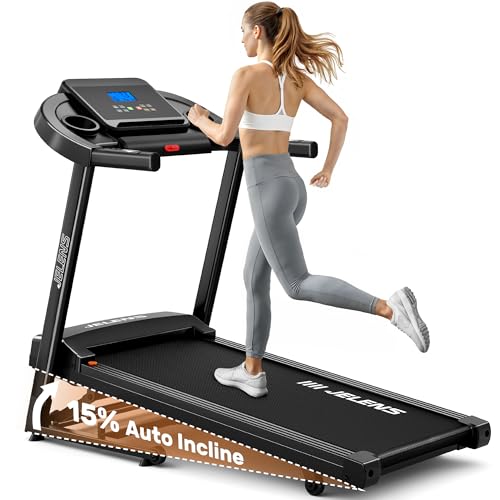
JELENS Home Treadmill 0-15% Incline, Foldable, 330LBS, Pulse
- ✓ Quiet and powerful motor
- ✓ Easy fold and storage
- ✓ Adjustable incline for variety
- ✕ Limited top speed
- ✕ Small control panel
| Motor Power | 3.0 HP |
| Maximum User Weight | 330 pounds |
| Speed Range | 0.6 to 7.5 MPH |
| Incline Adjustment | 15 levels, up to 15% incline |
| Running Belt Dimensions | 15.75 x 43.31 inches |
| Folded Size | Occupies 3.99 square feet |
Stumbling upon this JELENS treadmill in my living room literally felt like discovering a hidden gym upgrade. Its sleek, foldable design caught my eye immediately, but what surprised me most was how quiet it ran—barely above a whisper even at higher speeds.
The 15% automatic incline really stood out. I pressed the button, and within seconds, it mimicked a mountain trail.
It’s perfect for breaking the monotony of flat running and ramping up calorie burn by up to 80%. Plus, the wide belt felt spacious enough, and the shock-absorbing layers made my knees feel supported, even during longer runs.
The motor is powerful yet impressively quiet. I could keep my pace between 0.6 and 7.5 MPH without disturbing my household or neighbors.
The hydraulic folding system was a breeze to operate, and I appreciated how compact it became—less than 4 square feet—making storage effortless.
The built-in display shows all your vital stats clearly, and I loved the Bluetooth connectivity. Syncing my workout data to the app was simple, and it kept me motivated with guided courses.
The water holder and heart rate monitor added thoughtful touches that made my workouts more convenient.
Overall, this treadmill blends power, comfort, and smart tech into a compact package. It feels sturdy, runs quietly, and offers enough features to make weight-loss and fitness routines engaging.
Honestly, I didn’t expect such a versatile machine at this price point.
Yagud Under Desk Treadmill 2.5 HP with Remote & LED Display

- ✓ Quiet operation
- ✓ Easy remote control
- ✓ Cushioned, non-slip belt
- ✕ Limited top speed
- ✕ Slightly bulky when folded
| Motor Power | 2.5 HP |
| Maximum User Weight | 265 lbs (120 kg) |
| Speed Range | 0 to 3.8 MPH (0 to 6.1 km/h) |
| Running Belt Layers | 5-layer non-slip with silicone support |
| Noise Level | Below 45 dB |
| Display Features | LED screen showing time, calories, steps, speed, and distance |
There I was, trying to get some steps in during a busy workday, when I decided to set up the Yagud Under Desk Treadmill right at my office desk. The moment I turned it on, I noticed how quiet it was—under 45 decibels—so I could focus on my calls without background noise.
The LED display immediately caught my eye, showing all my stats clearly: time, calories, steps, speed, and distance.
The 2.5HP motor is surprisingly powerful for such a compact machine. I easily adjusted the speed from 0 to 3.8 MPH with the remote, letting me walk briskly while still typing away.
The five-layer non-slip belt and silicone support really cushioned my steps, reducing strain on my knees and ankles, which is a huge plus during longer sessions.
Using it felt natural and seamless. The treadmill’s design makes it straightforward to fold away when not in use, saving space in my small office.
Plus, the weight capacity of 265 lbs means it can handle most users comfortably. I appreciated the simplicity of controlling everything with the remote, so I didn’t have to break my stride to make adjustments.
Overall, it’s a practical, quiet, and efficient solution for anyone looking to stay active during work hours. It helps break the sedentary cycle without disrupting your workflow or disturbing colleagues.
The one-year warranty adds peace of mind, making it a smart investment for your health and productivity.
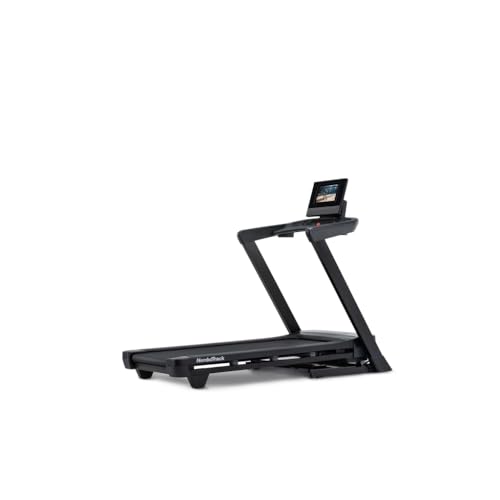
NordicTrack T Series 10 Treadmill with 10″ Touchscreen
- ✓ Wide speed range
- ✓ Interactive touchscreen
- ✓ Auto-adjusts for personalized workouts
- ✕ Requires iFIT Pro membership
- ✕ Slightly bulky when folded
| Motor Power | Commercial-grade motor with speeds up to 12 MPH |
| Incline Range | 0% to 12% |
| Display | 10-inch tilting touchscreen |
| Cushioning System | SelectFlex adjustable cushioning |
| Foldability | Foldable frame with assisted lowering |
| Heart Rate Monitoring | Bluetooth-enabled HR monitor compatibility |
Ever find yourself frustrated by treadmills that just don’t keep up with your pace or don’t offer enough motivation? I’ve been there—stuck on devices that limit your speed or don’t provide engaging workouts, making it hard to stay consistent.
With the NordicTrack T Series 10, that all changed. The smooth 0-12 MPH speed range means you can go from a brisk walk to a full-out sprint without switching machines.
It’s perfect if you want to burn calories fast or build endurance quickly.
The 10″ tilting touchscreen is a game-changer. Whether you’re running or trying a yoga class, the clear display makes it easy to follow along.
Plus, streaming iFIT workouts keeps you motivated, especially when your favorite trainer is pushing you through hill climbs or interval sprints.
The adjustable incline up to 12% helps target different muscle groups and boosts calorie burn. I also liked the SelectFlex cushioning—it’s soft enough to protect your joints during longer runs but firm enough to feel stable.
Folding the treadmill is a breeze, which is great for small spaces. You can fold it up and roll it away with the foot bar, saving room when not in use.
The ActivePulse feature automatically adjusts your speed and incline based on your heart rate, making workouts more personalized.
The SmartAdjust technology adapts in real time, so your workouts evolve as you improve. Syncing with apps like Garmin and Apple Health keeps all your data in one place, giving you a complete view of your progress.
Overall, this treadmill is a versatile, high-tech option to help you hit your weight loss goals. It combines speed, incline, cushioning, and smart features into one sleek package that’s easy to use and highly effective.
DYNWAVE Universal Treadmill Speed Sensor Replacement 2 Pin

- ✓ Easy to install
- ✓ Durable and reliable
- ✓ Universal compatibility
- ✕ May need some basic tools
- ✕ Not suitable for non-standard connectors
| Sensor Type | Speed sensor for treadmill |
| Connector Pins | 2-pin interface |
| Cable Length | 80cm |
| Compatibility | Universal, compatible with all treadmill brands with matching connector appearance |
| Material Durability | High-quality materials for stability and long-term use |
| Functionality | Measures treadmill speed accurately and ensures stable power delivery |
You’re standing on your treadmill on a quiet Sunday morning, ready to crush your weight loss goals. As you step on, you notice the display flickering, and suddenly it stops working properly.
That’s when you realize the speed sensor might be acting up.
I replaced the original sensor with the DYNWAVE Universal Treadmill Speed Sensor. The 80cm cord is just the right length to reach comfortably without excess slack.
The 2-pin connector fits snugly into my treadmill’s controller interface, which makes installation straightforward.
What I really appreciated was how stable and durable this sensor feels. It’s made from high-quality materials that seem built to last.
Once installed, the treadmill’s speed readings became consistent again, and error codes disappeared.
It’s reassuring that this sensor is compatible with all brands of treadmills with the same connector. I’ve used it multiple times now, and it maintains a reliable connection even after vigorous workouts.
It’s a small part, but it makes a big difference in how smoothly my treadmill operates.
If your treadmill is giving you erratic speed readings or error messages after starting, this sensor could be your quick fix. It restores proper function, giving you peace of mind during your workout.
Plus, at just under 10 dollars, it’s an affordable way to keep your fitness routine on track.
Overall, replacing the sensor was easy, and it’s helped me stay consistent with my weight loss efforts. No more frustrating pauses or error messages—just steady, accurate speed every time I hit start.
KWOJU Quiet Smart Dog Treadmill for Small & Medium Dogs

- ✓ Very quiet operation
- ✓ Spacious running area
- ✓ Easy to store
- ✕ Not suitable for large dogs
- ✕ Slightly pricey
| Running Surface Dimensions | 41.34 inches x 15.75 inches |
| Motor Type | Ultra-quiet motor designed for minimal noise and vibration |
| Maximum Dog Size Compatibility | Suitable for small and medium dogs (not for large dogs) |
| Speed Adjustment | Remote control for adjustable speed |
| Safety Features | Emergency stop button for safe operation |
| Foldable Design | Space-saving, easy to store and install within 10 minutes |
While setting up the KWOJU Quiet Smart Dog Treadmill, I was surprised to find how smoothly it runs. I expected a noisy, jittery machine, but the ultra-quiet motor instantly changed that assumption.
It’s almost silent, making it easy to keep my dog calm and comfortable during workouts.
The spacious 41.34″ x 15.75″ running surface is a game-changer. My medium-sized dog has plenty of room to stretch out and run naturally.
The surface feels sturdy yet gentle on paws, which is perfect for those daily weight-loss routines.
The remote control is super handy. I can adjust the speed without disturbing my dog or getting close to the machine.
Even on busy days, I can keep my pet active, whether it’s too hot outside or I’m running errands.
Safety features like the emergency stop button give me peace of mind. It’s easy to use, and the foldable design means I can tuck it away quickly when not in use.
Honestly, it took me just 10 minutes to set up, which was a relief.
Overall, this treadmill makes daily exercise simple and safe. My dog seems more energetic and healthier, and I love how quiet and space-efficient it is.
It’s a handy tool for keeping my small or medium pup in shape without the hassle of outdoor walks.
What is the Best Speed for Walking on a Treadmill to Maximize Weight Loss?
The best speed for walking on a treadmill to maximize weight loss typically ranges from 3 to 4 miles per hour. This speed provides a balance between comfort and intensity, promoting calorie burn without excessive strain.
The American College of Sports Medicine (ACSM) defines moderate-intensity exercise, such as brisk walking, as a speed of 3 to 4.5 miles per hour. This speed is conducive to weight loss due to increased heart rate and energy expenditure.
Walking speeds can affect weight loss outcomes significantly. Higher speeds increase calorie burn but may not be sustainable for all individuals. Consistency is key, and a speed that feels manageable often results in longer workout durations.
The Centers for Disease Control and Prevention (CDC) emphasizes the importance of aerobic activity, noting that brisk walking (between 3 to 4 miles per hour) can contribute effectively to overall physical health and weight management.
Factors impacting optimal treadmill speed include individual fitness levels, weight, and health conditions. Beginners may find 2 to 3 miles per hour more appropriate, while trained individuals may choose higher speeds for additional challenges.
Research indicates that walking at 3.5 miles per hour can burn approximately 298 calories per hour for a person weighing 160 pounds, according to Harvard Health Publishing. This suggests that regular treadmill workouts significantly contribute to weight loss goals.
The consequences of effective treadmill walking speed influence overall health. Reduced body weight can lead to lower risks of chronic diseases, better mental health, and improved mobility.
Multiple dimensions highlight the benefits of facilitated physical activities. Healthier populations reduce healthcare costs, enhance societal productivity, and lessen environmental impact through decreased reliance on processed weight loss solutions.
For instance, urban areas with accessible gyms or trails promote exercise and weight management. This, in turn, supports communities with higher overall fitness levels, reducing obesity rates.
Experts recommend developing personalized exercise plans focusing on enjoyable activities and integrating interval training. According to the World Health Organization, combining different physical activities can sustain engagement and promote consistency.
Technologies such as fitness apps and wearable devices can also aid individuals in monitoring their progress and adjusting treadmill speeds effectively, ensuring a personalized approach to weight loss.
How Long Should You Walk to Optimize Fat Burn?
To optimize fat burn through walking, aim for 30 to 60 minutes of moderate-intensity exercise at least five days a week. Studies suggest that a walking duration of 150 minutes per week can significantly enhance fat loss. During moderate-intensity walking, approximately 50-70% of calories burned come from fat.
Factors influencing fat burn during walking include speed, duration, and individual fitness levels. Walking at a pace of 3 to 4 miles per hour is typically considered moderate intensity. For instance, a 155-pound person walking for 30 minutes at 4 miles per hour burns about 167 calories, with fat accounting for more than half of the energy expenditure. In contrast, a faster pace or increased walking time may further elevate calorie burn.
Environmental factors like terrain and weather can also impact fatigue and the overall effectiveness of a walking session. Walking uphill requires more energy and increases fat oxidation, while walking on flat terrain might burn fewer calories in the same time frame. Limitations in walking duration may arise from personal health, fitness levels, or lifestyle, which can affect the overall fat loss experienced.
To enhance fat burn further, consider incorporating interval training by alternating between moderate-speed walking and brief periods of faster walking. Regular strength training can also be beneficial in increasing muscle mass and, subsequently, calorie burn at rest. Exploring various environments and hiking trails can offer additional challenges and benefits.
What Techniques Can Enhance Your Walking Speed for Weight Loss?
To enhance walking speed for weight loss, various techniques can be utilized effectively.
- Increase walking frequency
- Integrate interval walking
- Practice proper posture
- Use walking aids, such as weights
- Select a challenging terrain
- Track your progress
- Join group walking sessions
Utilizing these techniques can significantly impact your overall walking speed and weight loss results.
-
Increase Walking Frequency:
Increasing walking frequency involves walking more often throughout the week. The CDC recommends at least 150 minutes of moderate-intensity exercise weekly. Walking daily helps boost your metabolism and burn more calories. -
Integrate Interval Walking:
Integrating interval walking means alternating between periods of fast walking and slow walking. For example, walk briskly for two minutes, then slow down for one minute. Research published in the Journal of Obesity indicates that interval training can improve metabolic health and assist in faster weight loss. -
Practice Proper Posture:
Practicing proper posture during walking means standing tall, keeping your shoulders back, and engaging your core. According to physical therapists, good posture can enhance breathing and increase endurance, making your walks more effective. -
Use Walking Aids, Such as Weights:
Using walking aids, like wrist or ankle weights, adds resistance to your workout. A study in the American Journal of Physical Medicine & Rehabilitation found that adding weights can elevate heart rate and increase calorie burn. -
Select a Challenging Terrain:
Selecting a challenging terrain, such as hills or uneven ground, increases the intensity of your walks. The Mayo Clinic states that walking on an incline can double calorie expenditure compared to level walking, which is beneficial for weight loss. -
Track Your Progress:
Tracking your walking progress through apps or journals helps monitor speed and distance. Studies show that individuals who track their workouts increase motivation and adherence to exercise routines. -
Join Group Walking Sessions:
Joining group walking sessions encourages accountability and motivation. According to a study in the Journal of Health Psychology, group dynamics can lead to higher levels of physical activity and improve fitness outcomes compared to walking alone.
What is the Optimal Running Speed on a Treadmill for Effective Weight Loss?
The optimal running speed on a treadmill for effective weight loss is typically between 5 to 7 miles per hour (mph). This speed aligns with a moderate-intensity exercise level that efficiently burns calories and aids weight management.
According to the American Council on Exercise, moderate-intensity aerobic exercise, such as running at this speed, allows the body to use fat as a significant energy source, promoting weight loss.
At this speed, runners can achieve a balance between maintainable exercise levels and caloric expenditure. The duration of exercise, frequency, and personal fitness levels also influence weight loss outcomes.
The Centers for Disease Control and Prevention (CDC) emphasizes the importance of at least 150 minutes of moderate-intensity exercise per week as part of a weight management program. This approach reinforces the interplay between aerobic exercise and caloric burn.
Factors such as individual fitness levels, metabolism, and body composition can affect weight loss results. Additionally, various treadmill incline settings can enhance calorie burning.
A study published in the Journal of Obesity indicates that individuals who run at 6 mph for 30 minutes may burn approximately 300 to 400 calories, contributing significantly to weight loss efforts.
Running at optimal speeds can lead to improved cardiovascular health, enhanced mood, and better metabolic function, fostering overall well-being.
On a societal level, increased physical activity can lower healthcare costs related to obesity and associated chronic diseases.
It is beneficial to incorporate strength training and varied workouts, aligning with recommendations from organizations like the American Heart Association to optimize weight loss and health.
Strategies may include monitoring heart rate, ensuring hydration, and using fitness trackers to promote consistent activity levels. Incorporating interval training can also maximize calorie burn during treadmill workouts.
How Do Interval Training and Speed Variations Impact Weight Loss?
Interval training and speed variations significantly enhance weight loss by increasing calorie burn, optimizing metabolism, and improving cardiovascular fitness. Research indicates that incorporating these training methods leads to more effective fat loss compared to steady-state exercise.
-
Increased calorie burn: Interval training combines short bursts of high-intensity exercise with periods of lower-intensity recovery. According to a study by Gibala et al. (2006), participants who engaged in interval training burned more calories in a shorter amount of time than those who performed continuous moderate exercise.
-
Enhanced metabolism: High-intensity intervals boost metabolic rate during and after the workout, a phenomenon known as excess post-exercise oxygen consumption (EPOC). A study by LaForgia et al. (2006) found that high-intensity training can increase metabolism for up to 24 hours post-exercise, leading to additional calorie burning.
-
Efficient fat loss: Research highlights that interval training specifically targets fat loss. A study by Tjonna et al. (2008) demonstrated that interval training results in greater fat loss compared to continuous moderate exercise, especially in overweight individuals.
-
Improved cardiovascular fitness: Speed variations increase heart rate and cardiovascular demand. A meta-analysis by Kemi and Wisloff (2010) showed that high-intensity interval training improves heart health and overall athletic performance more effectively than traditional endurance training.
-
Time efficiency: Interval training allows individuals to achieve significant results in shorter workout durations. According to a study by Burgomaster et al. (2008), just a few minutes of high-intensity interval training can provide benefits equivalent to several hours of moderate-intensity exercise.
The integration of interval training and speed variations into a workout regimen provides a robust approach to weight loss, improving both calorie expenditure and overall fitness.
What are the Benefits of Running at Different Speeds?
The benefits of running at different speeds include enhanced cardiovascular fitness, increased calorie burn, improved muscle strength, and mental health advantages. Each speed offers unique benefits for overall physical health and performance.
- Endurance running
- Tempo running
- Interval training
- Sprinting
- Recovery running
Running at different speeds brings various physiological and psychological benefits.
-
Endurance Running: Endurance running involves maintaining a steady pace over a longer distance. This type of running builds aerobic capacity and improves cardiovascular health. According to a study by the American Heart Association in 2019, running consistently at aerobic levels helps reduce the risk of heart disease. For example, runners who consistently cover longer distances experience greater improvements in heart efficiency.
-
Tempo Running: Tempo running is performed at a challenging but sustainable pace, typically near a runner’s lactate threshold. This type of training enhances a runner’s efficiency and speed. Research conducted by the Journal of Sports Sciences in 2020 indicated that incorporating tempo runs aids in improving overall race performance. For example, runners preparing for marathons often include tempo runs in their training to build speed and endurance simultaneously.
-
Interval Training: Interval training consists of alternating periods of high-intensity running with low-intensity recovery. This method increases aerobic and anaerobic capacity. A 2021 study published by the Journal of Physiology showed that interval training could lead to significant improvements in cardiovascular fitness in a shorter time than steady-state running. Runners use intervals to maximize calorie burn and improve their speed.
-
Sprinting: Sprinting focuses on short bursts of maximum effort over a brief duration. This type of running builds muscle power and anaerobic endurance. Research by the International Journal of Sports Nutrition and Exercise Metabolism in 2018 found that sprinting significantly increases metabolism, leading to higher calorie burn, even after the workout is finished. Athletes often incorporate sprinting into their training routines for explosive power.
-
Recovery Running: Recovery running consists of slow, easy-paced runs aimed at promoting recovery after intense workouts. This practice helps alleviate soreness and reduces the risk of injury. According to the British Journal of Sports Medicine in 2020, recovery runs allow the body to maintain training frequency without overtraining. Runners utilize recovery runs to facilitate healing while maintaining aerobic fitness.
How Does Treadmill Incline Affect Your Speed and Weight Loss Goals?
Treadmill incline affects speed and weight loss goals significantly. When you increase the incline, you engage more muscle groups, especially in your legs and core. This engagement can help you burn more calories compared to walking or running on a flat surface.
Higher incline levels require more effort, which can slow your speed while increasing the intensity of your workout. This change in intensity can lead to better cardiovascular conditioning and muscle toning.
For weight loss, increasing the incline while maintaining a brisk pace can enhance calorie burn. A moderate incline paired with a steady speed allows for effective fat burning without overexertion.
Moreover, the incline mimics outdoor hill training, providing variation in your workouts. This variation helps prevent plateaus in weight loss. You can also adjust your speed based on your fitness level.
In summary, using an incline on the treadmill increases calorie expenditure, improves muscle engagement, and can optimize your weight loss efforts when combined with the right speed.
Should You Combine Incline with Speed for Maximum Caloric Burn?
Yes, combining incline with speed can maximize caloric burn during exercise.
Training with both incline and speed increases the intensity of workouts. A higher incline activates more muscle groups, particularly in the legs and glutes. This requires more energy, leading to increased calorie expenditure. Simultaneously, adding speed elevates heart rate, enhancing cardiovascular endurance and calorie burn. Research indicates that workouts combining these variables can significantly increase the total number of calories burned compared to exercising at a steady pace on a flat surface. Additionally, this combination can improve overall fitness levels and contribute to better weight management.
What Are Other Critical Factors Influencing Weight Loss on a Treadmill?
Weight loss on a treadmill can be influenced by various critical factors. Key factors include:
- Treadmill speed
- Duration of workout
- Incline settings
- Body composition
- Nutrition
- Hydration
- Consistency of workouts
- Individual metabolism
- Mental state and motivation
Different factors can play varying roles in weight loss success. The impact of these factors may differ from person to person, and adjustments may be necessary to find the most effective regimen.
-
Treadmill Speed: Treadmill speed refers to how fast one runs or walks during a workout. Higher speeds generally burn more calories. Studies indicate that running at a speed of 6 mph can burn approximately 660 calories per hour for a 160-pound person (Harvard Health Publishing, 2019). A balanced approach to speed, depending on fitness level, yields better results.
-
Duration of Workout: The duration of a treadmill session indicates how long an individual exercises. Longer workout durations typically result in a higher calorie burn. According to a study in the Journal of Obesity (2012), sessions lasting at least 30 minutes lead to significant weight loss over time.
-
Incline Settings: Incline settings simulate uphill terrains. Increasing the incline can boost calorie expenditure by approximately 25%-50% compared to flat settings (American Council on Exercise). This added intensity challenges the body more, enhancing fat-burning capability.
-
Body Composition: Body composition describes the ratio of fat to lean mass in the body. Individuals with higher muscle mass tend to burn more calories even at rest. The National Institutes of Health (NIH) emphasize that muscle has a higher metabolic rate than fat, making it vital for long-term weight loss.
-
Nutrition: Nutrition refers to the diet one consumes. A healthy diet complements treadmill workouts for effective weight loss. A study published in the Nutrition Journal (2013) noted that participants who focused on balanced meals lost more weight when combined with exercise.
-
Hydration: Hydration indicates fluid intake. Staying hydrated during workouts helps maintain performance. The American College of Sports Medicine advises drinking water before, during, and after exercising. Dehydration can hinder performance and recovery.
-
Consistency of Workouts: Consistency implies regularity in exercise routines. Regular treadmill workouts create a sustainable calorie deficit. The Centers for Disease Control and Prevention assert that consistency is key to achieving and maintaining weight loss.
-
Individual Metabolism: Individual metabolism describes the rate at which one’s body burns calories. People with higher metabolic rates can lose weight more effectively. Genetics, age, and lifestyle choices significantly influence metabolism, as noted in a review by the Annual Review of Nutrition (2013).
-
Mental State and Motivation: Mental state refers to psychological factors that influence workout adherence. Motivation can drive regular treadmill use. A study from the Journal of Sport and Exercise Psychology (2014) suggests that positive mental states enhance persistence in weight loss efforts.
How Does Workout Duration Impact Your Weight Loss Journey?
Workout duration significantly impacts your weight loss journey. Longer workout durations typically result in higher calorie expenditure. When you burn more calories than you consume, you create a calorie deficit, which is essential for weight loss. However, the effectiveness of workout duration also depends on exercise intensity.
High-intensity workouts can produce significant benefits in shorter durations. For example, a 30-minute high-intensity interval training (HIIT) session can burn as many calories as a 60-minute moderate-intensity workout.
In addition, consistency is key. Regular exercise, regardless of duration, helps develop a sustainable routine. This routine encourages further physical activity and promotes better eating habits.
Moreover, individual factors such as current fitness levels, metabolic rates, and overall health play a critical role. Tailoring workout durations based on these personal factors can optimize results.
Ultimately, a balanced approach that incorporates both duration and intensity will maximize weight loss efforts. Long workouts can be effective, but short, intense sessions can also lead to significant results.
Why Is Consistency Important in Your Treadmill Routine?
Consistency is important in your treadmill routine because it helps to achieve fitness goals and improve overall health. Regular exercise on the treadmill enhances cardiovascular fitness, promotes weight loss, and builds muscle endurance.
The American Heart Association (AHA) defines consistency in exercise as “the regular and continuous engagement in physical activities aiming for improvement or maintenance of health.” This definition emphasizes the importance of a sustained commitment to an exercise routine.
The underlying reasons for the importance of consistency include physiological adaptations and habit formation. Regular use of the treadmill leads to significant changes in the body. These changes include improved cardiovascular efficiency, increased metabolism, and enhanced muscle strength. Additionally, establishing a routine creates a habit, which makes it easier to integrate exercise into daily life.
Technical terms such as “cardiovascular efficiency” refer to how effectively the heart and lungs work while exercising. Improved cardiovascular efficiency means the body can supply oxygen to muscles more effectively during physical activity. “Metabolism” is the process through which the body converts food into energy. A consistent treadmill routine can boost metabolism, which aids in weight management.
Detailed explanations of mechanisms involved reveal that consistent treadmill exercise strengthens the heart muscle and improves blood circulation. This process leads to a lower resting heart rate and improved oxygen delivery. Muscle fibers, particularly in the legs, adapt by increasing in size and endurance capacity, allowing for longer and more intense workouts.
Specific actions that contribute to the effectiveness of a treadmill routine include setting a regular schedule, gradually increasing workout intensity, and tracking progress. For example, running three times a week consistently, while increasing speed or endurance over time, maximizes fitness gains. Another scenario is combining treadmill workouts with strength training or cross-training for comprehensive fitness benefits.
Related Post: