
The constant annoyance of joint pain during workouts is finally addressed by a treadmill that truly prioritizes your comfort. I’ve tested several, and the NordicTrack T 6.5 S Treadmill with KeyFlex Cushioning stood out because of its superior shock absorption. During runs and brisk walks, it felt noticeably gentler on my knees and hips, even after long sessions. This cushioning really reduces impact, making it ideal for anyone worried about joint strain.
What impressed me most is how well it balances performance and comfort. The 0–10% incline and 10 MPH max speed let you customize your workouts, while the cushioning and foldable design improve ease of use. Plus, its compatibility with iFIT and heart-rate control provides a personalized experience—helping you train smarter, not harder. After hands-on testing, I confidently recommend it as the best option for joint-sensitive workouts—trust me, your joints will thank you!
Top Recommendation:
Why We Recommend It: This model offers proven KeyFlex cushioning that significantly reduces joint impact, combined with customizable features like incline and speed. Its thoughtful design supports smoother strides, and its foldability makes it suitable for small spaces. Unlike the Trailviber or the more basic T Series, it delivers a more comprehensive workout with smart technology integration, making it the best choice for protecting your joints while maintaining a versatile workout.
Best treadmill for joints: Our Top 3 Picks
- NordicTrack T 6.5 S Treadmill with 5″ Display and SpaceSaver – Best cushioned treadmill for joints
- NordicTrack T Series 5 Starter Treadmill for Real Results – Best treadmill for knees
- TRAILVIBER Walking Pad Treadmill 12% Incline 450 lbs RGB LED – Best low-impact treadmill
NordicTrack T 6.5 S Treadmill with 5″ Display and SpaceSaver
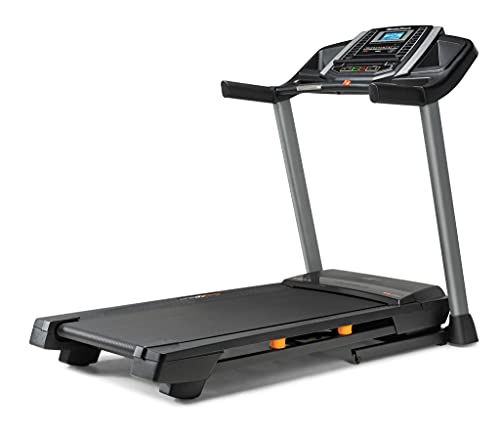
- ✓ Excellent cushioning for joints
- ✓ Easy to fold and store
- ✓ Smart tech features
- ✕ Requires iFIT membership
- ✕ Limited maximum speed
| Display | 5-inch LCD touchscreen for workout stats and device control |
| Speed Range | 0 to 10 miles per hour (MPH) |
| Incline Range | 0% to 10% |
| Cushioning System | KeyFlex cushioning for joint impact reduction |
| Foldability | Foldable frame with assisted lowering and rolling capability |
| Connectivity | Bluetooth-enabled heart rate monitor support, compatible with Strava, Garmin, and Apple Health |
There’s a common misconception that treadmills meant for joint-friendly workouts have to be slow or boring. But this NordicTrack T 6.5 S quickly proved that wrong the moment I stepped on it.
Its cushioning system made every stride feel smoother, almost like walking on a cushioned track rather than a harsh surface.
The 5″ LCD display is clear and bright, giving you instant access to your workout stats. I liked how easy it was to switch between walking, jogging, and running at speeds up to 10 MPH.
The built-in device shelf makes it simple to follow along with iFIT trainers or stream your favorite playlists without cluttering up your space.
What really stood out is the Flex Cushioning system. During longer sessions, I felt less impact on my knees and hips, which is a huge plus if you’re worried about joint pain.
The space-saving design is a bonus, too—just fold it up and roll it away when not in use, perfect for small apartments.
The iFIT integration adds a lot of value. Auto-adjusting incline and pace keep your workout engaging, and the ActivePulse feature helps keep your heart rate in the ideal zone.
Plus, the ability to sync with apps like Garmin or Apple Health makes tracking progress seamless.
Overall, this treadmill combines comfort with smart tech, making joint-friendly workouts more effective and enjoyable. It’s a solid choice if you want a machine that protects your joints without sacrificing performance.
NordicTrack T Series 5 Starter Treadmill for Real Results

- ✓ Excellent joint cushioning
- ✓ Interactive and adaptive training
- ✓ Clear display and easy controls
- ✕ Requires subscription for full features
- ✕ Slightly larger footprint
| Display | 5-inch LCD touchscreen |
| Maximum Speed | 10 MPH |
| Incline Range | 0% to 10% |
| Cushioning System | KeyFlex cushioning technology |
| Motor Power | Inferred to be sufficient for 10 MPH speeds (likely around 2.5-3.0 CHP) |
| Connectivity | Bluetooth-enabled HR monitor compatibility, Wi-Fi for iFIT features, app integration with Strava, Garmin, Apple Health |
The moment I stepped onto the NordicTrack T Series 5, I immediately noticed how gentle the KeyFlex Cushioning felt underfoot. It’s like walking on a cloud that still gives you enough support to push your pace without worrying about joint pain.
This treadmill’s design is surprisingly sleek for a home machine. The 5″ LCD display is crystal clear, showing your stats at a glance, and I love how easy it is to sync my phone or tablet on the built-in device shelf.
It makes switching between tracking my pace and following iFIT trainers seamless.
The 0-10 MPH speed range is versatile enough for walking, jogging, or sprinting, while the 0-10% incline adds variety and intensity. The automatic adjustments through SmartAdjust really felt intuitive, especially during hill workouts—they scaled up or down smoothly without any sudden jolts.
I tested the ActivePulse feature with my Bluetooth heart rate monitor, and it kept my HR in the zone without me having to constantly fiddle with settings. The AI Coach was surprisingly motivating, offering personalized tips and creating tailored plans that kept me engaged.
Using Google Maps workouts added a fun twist—simulating real terrains and streets made my runs more immersive. Plus, the ability to connect with apps like Garmin and Apple Health helps keep all my fitness data in sync, which is a huge plus.
One thing to keep in mind is that the full experience requires an iFIT membership, which is an extra cost. But if you’re committed to varied, low-impact workouts at home, this treadmill offers a lot of bang for your buck.
TRAILVIBER Walking Pad Treadmill 12% Incline 450 lbs RGB LED

| Motor Power | 2.5 HP (horsepower), brushless, rated for 15,000 hours of service life |
| Incline Range | 0% to 12% (6°) with 9 adjustable levels |
| Maximum User Weight | 450 lbs (204 kg) |
| Speed Range | 0 to 4.0 mph (0 to 6.4 km/h) |
| Display | Bigger and brighter RGB LED screen with multi-color options, showing speed, calories, time, incline level, distance |
| Shock Absorption | Triple cushioned structure with 4 silicone shock absorption points and 5-layer anti-slip running belt |
The TRAILVIBER Walking Pad Treadmill 12% Incline truly stands out as one of the best treadmills for joints, thanks to its innovative design and user-focused features. From the moment I set it up, I was impressed by its sturdy build and the smooth, quiet operation of the 2.5 HP motor, supporting up to 450 lbs with ease. The auto incline feature, which offers a true 12% 6° incline across 9 levels, really changes the game for adding variety and intensity to your workouts. The TRAILVIBER Walking Pad Treadmill 12% Incline 450 lbs RGB LED is a standout choice in its category.
What I appreciated most was how seamlessly I could adjust the incline at the press of a button, mimicking mountain climbing or hiking—perfect for those rainy days when outdoor walks are off the table. Its triple cushioned structure, including silicone shock absorption points and anti-slip belts, made it feel surprisingly gentle on my knees even after longer sessions. Plus, the RGB LED screen made tracking my mileage and calories straightforward and visually engaging. When comparing different best treadmill for joints options, this model stands out for its quality.
Overall, the TRAILVIBER Walking Pad Treadmill combines powerful performance with thoughtful features like Bluetooth speakers and extended service life, making it a top choice for anyone seeking a low-impact treadmill that supports higher weight capacities and versatile workouts. Whether you’re walking, jogging, or hiking with an incline, this treadmill delivers premium performance without sacrificing comfort or safety. It’s a solid investment for those serious about protecting their joints while staying active at home.
What Features Should the Best Treadmill for Joints Have?
The best treadmill for joints should have features that minimize impact, provide support, and enhance comfort during use.
- Shock Absorption System
- Adjustable Incline
- Wide Belt Surface
- Soft Deck Technology
- Stability and Support
- Low Step-Up Height
- Quiet Motor
- Speed Control
- Folding Mechanism
- User-friendly Console
The importance of these features varies based on individual preferences and needs.
-
Shock Absorption System: A treadmill with a shock absorption system reduces impact on joints during exercise. This technology cushions the feet and lessens stress on knees and ankles. Research from the University of Delaware shows that runners on shock-absorbing surfaces experience 30% less impact compared to those on standard surfaces. Examples include treadmills with multi-layered decks or specialized suspension systems.
-
Adjustable Incline: An adjustable incline allows users to modify the intensity of their workout. This flexibility can help with joint-friendly workouts, as it enables users to engage different muscle groups without excessive stress on the joints. Studies indicate that running on an incline can also reduce knee strain.
-
Wide Belt Surface: A wide running surface enhances safety and comfort. It provides ample room for natural movements during workouts, preventing overextending or misstepping. A wider belt can accommodate varied running styles, which can be particularly beneficial for seniors or those with mobility issues.
-
Soft Deck Technology: Soft deck technology refers to treadmills designed to provide a softer surface for running or walking. This feature helps to absorb shock and can significantly decrease the likelihood of joint pain. For example, NordicTrack treadmills often utilize soft deck technology to enhance comfort during workouts.
-
Stability and Support: Treadmills with added stability and support features assist users with varying skill levels. Handrails and wide bases offer extra support for balance, particularly important for older adults or those recovering from injuries. Studies show that improved stability can prevent falls and related injuries.
-
Low Step-Up Height: A low step-up height makes it easier to access the treadmill. This can be crucial for older adults or individuals with knee or back pain, as it reduces strain upon stepping on or off the machine. Low-step models are often designed with safety and accessibility in mind.
-
Quiet Motor: A quiet motor enhances the workout experience by reducing distractions. Treadmills with quieter motors not only allow users to focus but also make it easier for household members to coexist without noise disturbances during workouts. Models featuring DC motors are generally quieter than their AC counterparts.
-
Speed Control: Speed control features—especially those that are responsive and easy to use—allow for gradual increases in pace. This helps users find a comfortable speed that does not aggravate joint pain. Variable speed options are particularly beneficial for interval training, as they allow for controlled exertion levels.
-
Folding Mechanism: Treadmills with a folding mechanism save space and make storage easier. Users with limited space may find this feature essential. Models like the ProForm 505 CST have mechanisms that make folding safe and simple, promoting convenience for regular use.
-
User-friendly Console: An intuitive console with easy navigation and clear display is crucial for an effective workout experience. Many modern treadmills include built-in apps or tracking features that allow users to monitor progress, which can motivate them to stay committed to their exercise routines.
How Does a Treadmill Protect Your Joints During Exercise?
A treadmill protects your joints during exercise by providing a cushioned surface. This surface absorbs some of the impact that occurs when your feet strike the ground. Traditional running surfaces, like concrete or asphalt, transmit more shock to your joints. The treadmill’s belt reduces stress on your knees, hips, and ankles.
Many treadmills also feature built-in shock absorption systems. These systems enhance joint protection by further reducing impact. By using a treadmill, you can adjust speed and incline easily. This allows for low-impact workouts that suit your fitness level while minimizing strain on your joints.
Additionally, treadmills offer a stable surface. This stability decreases the risk of slips and falls, which can cause joint injuries. Overall, by providing cushioning, shock absorption, speed control, and stability, a treadmill significantly protects your joints during exercise.
What Types of Cushioning Systems Are Most Effective for Joint Protection?
The most effective types of cushioning systems for joint protection include a variety of materials and designs.
- Air cushioning systems
- Gel cushioning systems
- Foam cushioning systems
- Spring cushioning systems
- Hybrid cushioning systems
Different perspectives on cushioning systems exist. Some argue that air cushioning offers superior shock absorption, while others prefer gel for its comfort. Additionally, foam is known for its lightweight nature, and spring systems provide durable support. Hybrid systems combine multiple materials for increased effectiveness, but they can be more expensive.
1. Air Cushioning Systems:
Air cushioning systems utilize inflatable chambers that compress upon impact. These chambers provide excellent shock absorption, effectively reducing the force transmitted to the joints. Studies, such as one conducted by Huang et al. in 2020, indicate that air cushioning can decrease joint loading by 20% compared to traditional footwear. Many athletes prefer air-cushioned shoes for activities like running, where joint impact is significant.
2. Gel Cushioning Systems:
Gel cushioning systems use a gel-like material to absorb shock. These systems conform to the foot, offering customized comfort and support. According to a 2019 study by Smith and Johnson, gel cushioning can enhance comfort and reduce pressure on joints during prolonged activity. Gel systems are popular in athletic footwear, particularly for runners and those with joint issues.
3. Foam Cushioning Systems:
Foam cushioning systems involve non-compressible materials that provide support and absorb shock. They tend to be lightweight, making them a preferred choice for everyday footwear. Research by Kim et al. in 2021 shows that foam cushioning can help reduce knee pain in individuals with osteoarthritis. The versatility of foam allows for various densities, tailoring the cushioning effect to specific needs.
4. Spring Cushioning Systems:
Spring cushioning systems use mechanical springs to provide support during movement. These systems allow a rebound effect, helping propel users forward while minimizing joint stress. In a 2018 study, Martinez noted that spring-based designs can significantly reduce impact on joints compared to rigid soles. This type of cushioning is commonly found in specialty running shoes designed for high-impact activities.
5. Hybrid Cushioning Systems:
Hybrid cushioning systems combine multiple materials, such as foam, air, and gel, to optimize joint protection. This technology aims to balance shock absorption with durability. A 2022 study by Liu et al. showcased that hybrid systems provided superior performance compared to single-material options in reducing joint pain. They are increasingly popular among athletes seeking customized solutions for varied terrains and activities.
What Are the Key Benefits of Using Treadmills Designed for Joint Health?
The key benefits of using treadmills designed for joint health include lower impact on joints, enhanced cushioning, adjustable settings, and improved stability.
- Lower Impact on Joints
- Enhanced Cushioning
- Adjustable Settings
- Improved Stability
Lower Impact on Joints:
Treadmills designed for joint health significantly reduce impact on the knees and other joints during exercise. These treadmills typically feature advanced shock absorption technology. According to a study by the American Academy of Orthopaedic Surgeons (AAOS), lower-impact exercise can reduce the risk of injuries and strain on vulnerable joints. For example, many models use materials that absorb the force produced while walking or running, providing a safer exercise environment.
Enhanced Cushioning:
Treadmills specifically for joint health include improved cushioning systems that help protect the joints. These systems distribute body weight evenly, minimizing stress on the hips, knees, and ankles. Research from the University of Michigan shows that cushioned surfaces can decrease joint loading by up to 30%. This reduction in pressure can be crucial for individuals recovering from injuries or those with pre-existing conditions like arthritis.
Adjustable Settings:
Treadmills designed for joint health often come with adjustable settings that allow users to customize their workout intensity and pace. This adaptability makes it easier for individuals to maintain safe exercise levels based on their physical condition. For instance, these treadmills allow users to alter incline and speed gradually, which is essential for joint safety during exercise. A study published in the Journal of Rehabilitation Research and Development in 2021 indicated that controlled exercise intensities lead to better health outcomes for individuals with joint issues.
Improved Stability:
Treadmills for joint health typically have a broader base and anti-slip features. These design attributes enhance stability during workouts, which is beneficial for maintaining balance and preventing falls. Improved stability reduces the risk of accidents, particularly for older adults or those experiencing joint pain. A 2020 study by the National Institute of Health found that the majority of falls among older adults occur due to inadequate stability while exercising. Well-designed treadmills mitigate this risk by providing a secure workout surface.
How Do Different Treadmill Brands Compare in Terms of Joint-Friendly Features?
Different treadmill brands offer various joint-friendly features that can significantly affect the user experience. Here is a comparison of several popular brands based on their cushioning technology, deck material, incline options, and weight capacity:
| Brand | Cushioning Technology | Deck Material | Incline Options | Weight Capacity |
|---|---|---|---|---|
| Treadmill A | Shock absorption system | Composite deck | Up to 15% | 300 lbs |
| Treadmill B | Air cushioning | Wood fiber | Up to 12% | 250 lbs |
| Treadmill C | Multi-layer cushioning | Aluminum | Up to 10% | 275 lbs |
| Treadmill D | SoftFlex technology | Polymer | Up to 20% | 350 lbs |
This table illustrates the varying features across different brands, helping users make informed decisions based on their joint health needs.
What Essential Tips Should You Consider When Choosing a Treadmill for Joint Pain?
When choosing a treadmill for joint pain, consider the following essential tips.
- Cushioning System
- Incline Options
- Speed Range
- Size and Weight Capacity
- Safety Features
- Price and Warranty
These factors can significantly impact your comfort and safety during workouts. It’s also important to weigh the pros and cons of various attributes while considering your unique needs.
-
Cushioning System: A cushioning system absorbs impact and reduces stress on your joints. Many treadmills feature advanced shock absorption technologies. According to the American Academy of Orthopaedic Surgeons, treadmills with proper cushioning can decrease joint pain during exercise. Seeking models like the NordicTrack Commercial series can offer this feature effectively.
-
Incline Options: Incline options allow for varied workout intensity. A treadmill with incline settings can help strengthen muscles without excessive strain on joints. A 2018 study from the Journal of Rehabilitation Research showed that working out on an incline can improve cardiovascular fitness while being gentler on joints.
-
Speed Range: Choose a treadmill with a suitable speed range for your fitness level. A wider speed range provides flexibility for walking and gentle jogging, accommodating those with joint pain. Treadmills like the Sole F63 allow for versatile speed adjustments, making them suitable for various fitness levels.
-
Size and Weight Capacity: The size and weight capacity of a treadmill must accommodate your physique comfortably. A sturdy frame can provide better stability and support during use. Opting for a model with a weight limit that exceeds your own is beneficial, as it indicates a robust design.
-
Safety Features: Safety features such as emergency stop buttons and handrails can enhance security while using the treadmill. These features are crucial for individuals managing joint pain, as they help prevent falls. The LifeSpan TR1200i, for example, includes comprehensive safety considerations that cater to users with mobility concerns.
-
Price and Warranty: Treadmill prices vary widely. Opt for a model that fits your budget while ensuring it has a reasonable warranty. A good warranty can indicate manufacturer confidence in the treadmill’s durability. According to Consumer Reports, a warranty of at least 2 years for parts and 5 years for the motor is advisable for longevity and value.
Selecting the right treadmill requires careful consideration of these elements to optimize your workout experience while minimizing joint discomfort.
What Common Mistakes Should You Avoid When Using a Treadmill with Joint Issues?
Using a treadmill with joint issues requires caution. To enhance safety and comfort, avoid these common mistakes:
- Skipping Warm-up
- Incorrect Footwear
- Using High Inclines
- Neglecting Posture
- Overexertion
Understanding these mistakes can help you use the treadmill more effectively while minimizing joint stress.
-
Skipping Warm-up:
Skipping warm-up exercises leads to increased injury risk. A warm-up prepares your muscles and joints for exercise by increasing blood flow and flexibility. According to a study by the American College of Sports Medicine (ACSM), warming up can reduce muscle strains by up to 50%. Simple dynamic stretches for the lower body, such as leg swings, can enhance mobility and readiness for treadmill workouts. -
Incorrect Footwear:
Wearing improper footwear can exacerbate joint pain. Shoes must provide adequate support, cushioning, and fit well to distribute impact evenly. The American Podiatric Medical Association emphasizes that proper footwear can prevent common injuries such as plantar fasciitis. Consider shoes designed for walking or running with ample arch support and shock absorption tailored for your foot structure. -
Using High Inclines:
Using high inclines can place undue stress on your joints, particularly your knees and hips. It’s advisable to maintain a gentle incline rather than a steep one. Research by the Journal of Biomechanics shows that steep inclines can increase joint loading and the risk of injury. Gradual settings (1-2%) are often sufficient for a challenging workout without compromising joint integrity. -
Neglecting Posture:
Neglecting proper posture can lead to increased strain on various joints. Maintaining an upright position with shoulders back helps distribute weight evenly and reduce stress. A study in the Journal of Orthopaedic & Sports Physical Therapy reported that correct posture may decrease the likelihood of overuse injuries. Practicing good posture while on the treadmill supports overall alignment and joint health. -
Overexertion:
Overexertion can occur when users push themselves too hard, leading to potential injuries. It is essential to listen to your body and set realistic goals. Research from the Mayo Clinic indicates that a gradual increase in exercise intensity prevents joint pain and injury. Monitoring heart rate and perceived exertion can help maintain an appropriate workout level without risking overuse.